organizing
How to Organize Cleaning Supplies Safely
Organize cleaning supplies by product type, surface, child and pet safety, ventilation, labels, and incompatible cleaner separation.
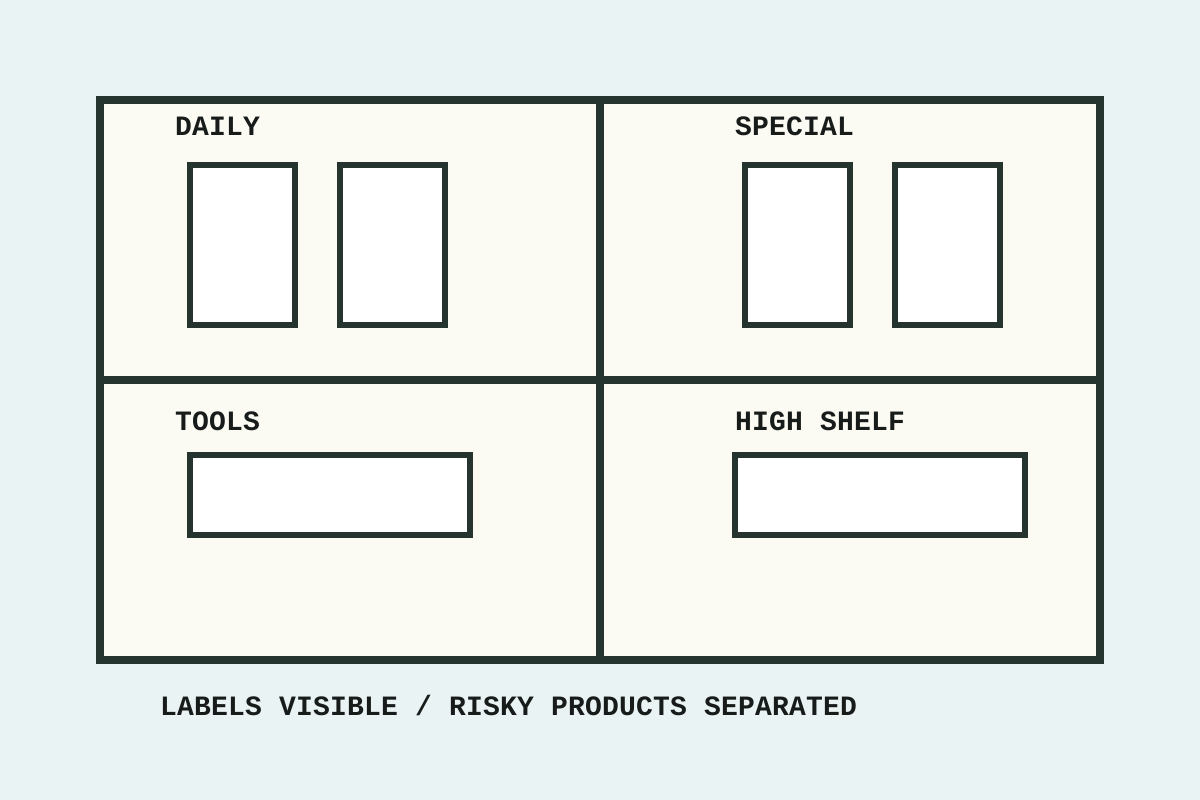
Group cleaners by job, keep original labels visible, separate risky combinations, and move hazards out of child or pet reach.
Safety note
Keep cleaners in original containers when possible, never decant unknown products, and separate bleach, ammonia, acids, and drain products.
What this page is meant to solve
Store cleaning products so the next cleanup is faster and safer.
When this advice applies
Households dealing with how to organize cleaning supplies safely. Renters and busy homes that need a low-risk first pass.
Why the order matters
Storage works only after the real categories are visible. Sorting first prevents buying containers for clutter that should leave. Finish line: The zone has fewer duplicates, visible categories, and a maintenance rule the household can repeat.
When to stop and reassess
Active leaks, electrical hazards, pest infestations, or damage that needs a professional. Items whose care label or manufacturer guidance conflicts with this method. Keep cleaners in original containers when possible, never decant unknown products, and separate bleach, ammonia, acids, and drain products.
Why these steps are ordered this way
The same cleaning supplies problem can need different treatment on glass, grout, fabric, food storage, sealed finishes, or small-space storage systems.
For how to organize cleaning supplies safely, a low-risk first move can be repeated or escalated, while a harsh first move can set stains, dull finishes, or leave residue.
Cleaning Supplies Issue can look solved while wet, scented, or freshly wiped. Judging after drying prevents repeating a method that only masked the problem.
Check surface safety gives the reader a focused follow-up instead of leaving the cleaning supplies issue as a one-off tip with no clear next step.
Steps that keep the job controlled
Name the material
Gather labels, open bins, gloves before starting.
Keep the job reversible
Work in a small area, use the gentlest method that can work, and give the surface or fabric time to respond.
Judge only when dry
Residue, moisture, and poor lighting can make a result look worse or better than it is. Let the area dry before escalating.
Group products by use and risk: daily cleaners, bathroom cleaners, laundry products, tools, and specialty chemicals.
Read labels for storage limits, ventilation, child safety, and incompatible products.
Keep original containers when labels include dilution, first aid, or hazard warnings.
Separate products that should not be stored or spilled together.
Put frequently used low-risk tools within reach and risky products in controlled storage.
Confirm the exact situation: Store cleaning products so the next cleanup is faster and safer.
Materials
- labels
- open bins
- gloves
- safety checklist
- locked storage if needed
Mistakes to avoid
- Decanting cleaners into unlabeled bottles.
- Storing acids, bleach, and ammonia-adjacent products together.
- Keeping old products with unreadable labels.
Use substitutes without changing the safety profile
Avoid sealed or opaque containers until you know the contents stay dry, visible, and easy to use.
Keep the substitute gentler than the original item, and test before using heat, acid, bleach, abrasion, or a sealed container.
Do not buy containers before measuring the shelf, confirming the category, and checking that daily items stay reachable.
Buying is useful only when the surface, fabric, food-safety, or storage constraint is already clear.
When the first pass does not solve it
Cleaning Supplies issue improves while wet but returns after drying.
Likely cause: Residue, oil, mineral film, detergent, moisture, or hidden clutter is still present after the first pass.
Fix: Repeat a smaller section, rinse or wipe more thoroughly, then wait until the area is fully dry before judging the result.
Cleaning Supplies issue gets better once, then comes back in the next routine cycle.
Likely cause: The upstream habit has not changed: drying, sorting, ventilation, use-first rotation, rinsing, or product dosing is still missing.
Fix: Add one visible cue at the source and use Check surface safety as the next focused article or tool.
Cleaning Supplies issue spreads, lightens, dulls, or feels sticky.
Likely cause: The method may be too strong, too wet, too abrasive, or too concentrated for the material.
Fix: Stop adding product, rinse or blot if the label allows it, ventilate if needed, and switch to product-label or manufacturer guidance.
Cleaning Supplies issue only improves after buying something new.
Likely cause: The first method may be masking the problem instead of solving the cause.
Fix: Go back to the how to organize cleaning supplies safely diagnosis step and confirm the surface, fabric, room, or storage constraint before buying again.
Cleaning Supplies issue is tied to odor, pests, mold, fumes, leaks, or repeated fabric damage.
Likely cause: The household problem has moved beyond a simple cleaning, laundry, food-storage, or organizing task.
Fix: Stop DIY, keep people and pets away if needed, and use qualified repair, remediation, product-label, landlord, or medical guidance.
Prevention
- Keep the cleaning supplies prevention cue visible where the problem begins, not hidden in a phone note or a distant checklist.
- Pair how to organize cleaning supplies safely with one maintenance trigger: after showering, before drying, before shopping, after laundry, or during the weekly reset.
Stop DIY when
- Stop if the cleaning supplies situation changes material, odor, color, texture, food safety, electrical, plumbing, pest, mold, or product-label assumptions.
- Stop when color lifts, finish dulls, fibers roughen, wood swells, stone etches, food smells off, or a container traps moisture.
- Stop if fumes, heat, skin irritation, a care label, or a manufacturer warning makes the method unsafe for the room or item.
Common checks
Should I keep cleaners in original bottles?
Yes when the label carries safety, dilution, or first-aid information.
Where should risky cleaners go?
Use a high, locked, or controlled location based on children, pets, and household access.
What should I discard?
Discard leaking, expired, separated, unlabeled, or unnecessary duplicate products according to local guidance.
What should I do first?
Start by narrowing the problem to how to organize cleaning supplies safely, then choose the gentlest method that can solve that exact case.
Sources and where this advice applies
These references support specific parts of the guidance. Product labels and surface instructions still control the final household choice.
Safer cleaning-product selection, ingredient caution, and product-assisted method boundaries.
Checked 2026-06-29Cleaner-mixing stop conditions, ventilation warnings, and escalation when fumes or symptoms appear.
Checked 2026-06-29